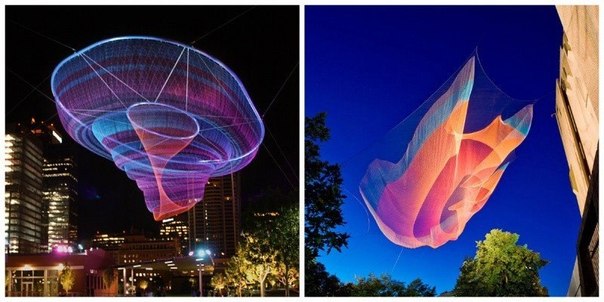
Janet Echelman was born in Florida in 1966. It implements works that intersect with sculpture, architecture, urban design, materials science, structural engineering, aviation and information technology. The art of Janet Echelman is extremely dynamic: it is transformed by wind and light, moving from the object on which a person looks into an object in which you can get lost.
Echelman began her artistic career after receiving a double degree in painting and psychology. In 1987, she moved to Hong Kong to learn Chinese calligraphy. Later - in Bali, then to Indonesia, where he works with artisans who combine traditional methods of textiles with modern painting. By coincidence, after strong fires in Bali, Janet loses her home and decides to return to the United States, where she begins to teach at Harvard. After seven years, her desire to return to Asia takes on real traits. She leaves for India, where her creative success begins. In Mahabalipuram, a fishing village, Echelman, walking along the beach, watches the fishermen laying nets in the sand.
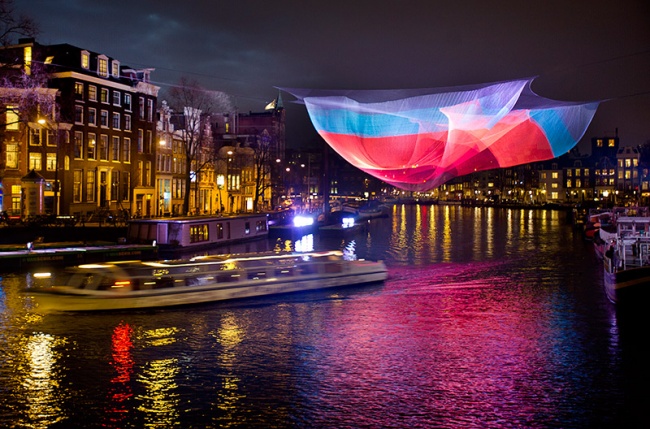
Constant walks lead Janet to the idea that networks are a new tool for creating sculptures with changing shapes, volume without heavy and solid objects. In collaboration with the same fishermen, Janet Echelman realizes her first sculptures with fishing nets, remaining enchanted, watching the movements and waviness they produce, depending on the wind and light. From the shores of Mahabalipuram, Janet Echelman returns to America, where he applies and applies the most modern and latest technologies to the ancient lesson of the Indian tradition.
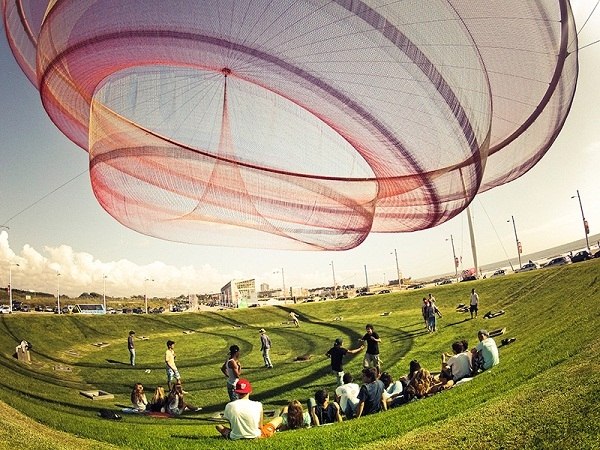
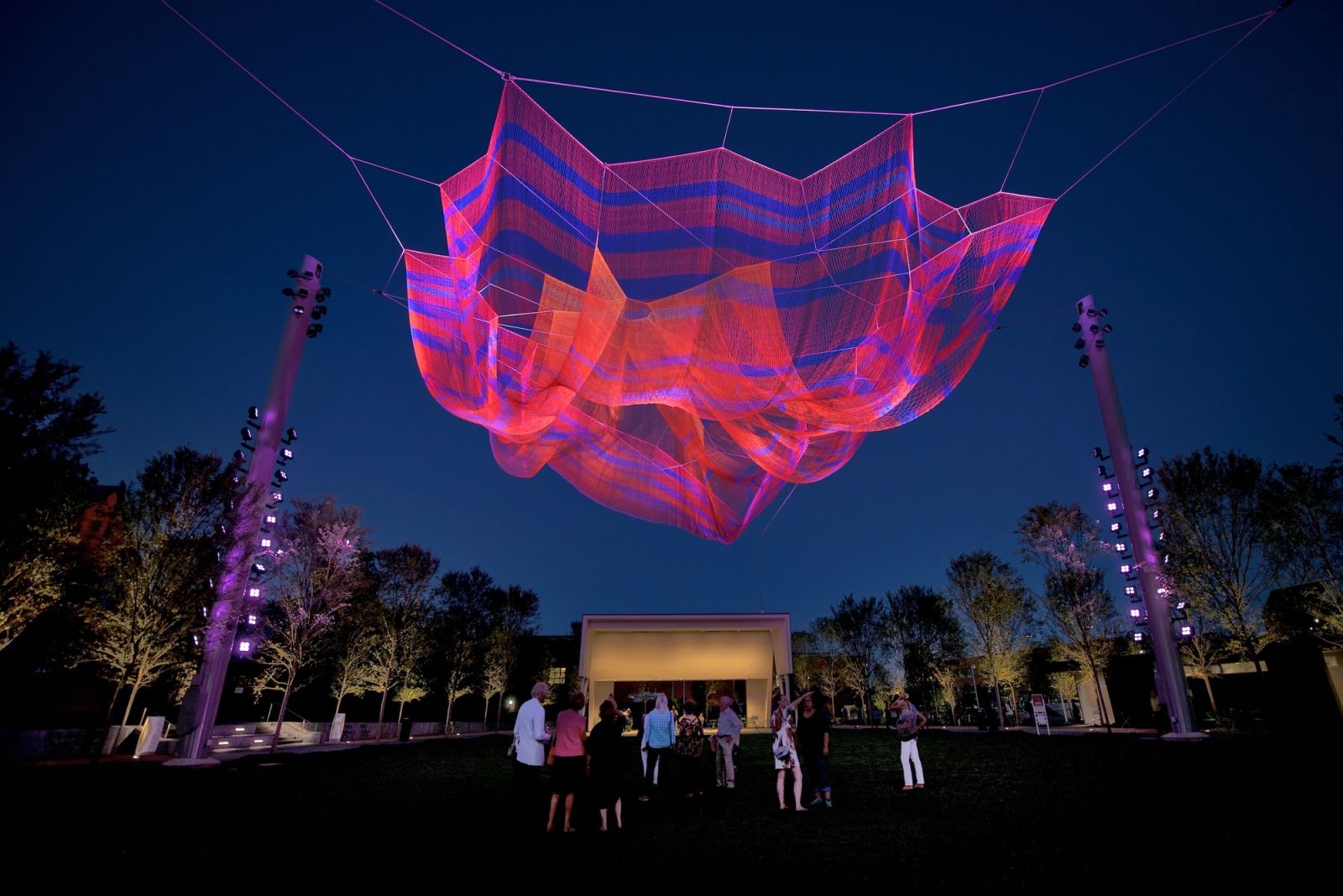
India’s experience is fundamental to understanding why Janet Echelman combines ancient Eastern craftsmanship with computational design software to create works that became central elements of city life on five continents, from Singapore, Sydney, Shanghai and Santiago to Beijing, Boston, New York and London. From a conceptual point of view, his creations are based on the observation of everyday objects and on reflections on their possible use, which is different from the usual. But not only: with his art, Janet Echelman wants to reflect on the relationship between nature and art. Its urban structures, actually made of textile fibers from textile fibers, are indeed man-made, but are completely controlled by natural elements, such as water, wind and sunlight. Obtained knowledge and skills of local craftsmanship in the East with avant-garde technologies and the urban landscape of the West, Echelman managed to create unusual works that attracted the attention of the whole world, so much that it attracted the attention of many people.
Janet Echelman won the Smithsonian Award for her ingenuity in the visual arts.
Artists are finding new and new methods, using modern technologies and ease of perception of the viewer, bringing them closer to the true moments of nature. We read another interesting publication about artists, which creates replicas even in the most unusual places, thereby creating an opportunity for everyone to get acquainted and learn the beauty of art in general - Replicas of world masterpieces in simple places.
Войти через соц. сети: