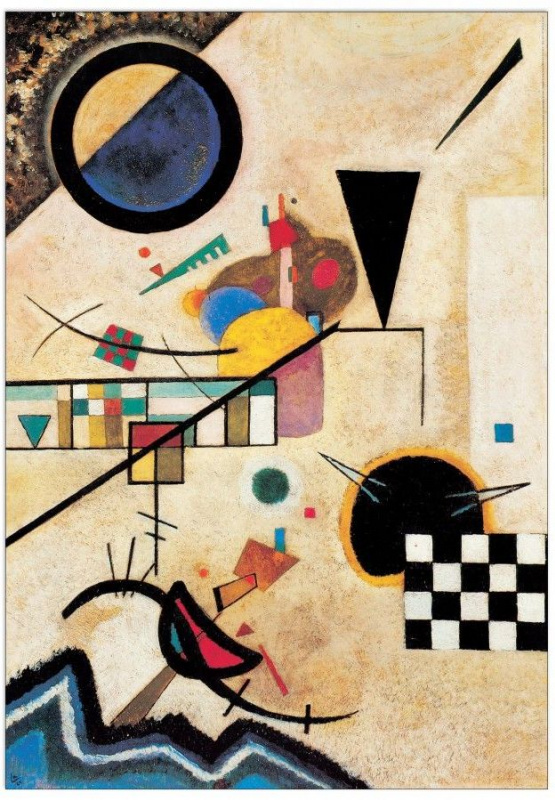
This is bold. This is minimal. It is functional. After a hundred years, the Bauhaus design continues to inspire artists, graphic designers and architects around the world.
He survived a century of competing styles, experienced initial criticism from the traditionalists, and although the Nazis closed the institute in 1933, the Bauhaus movement itself continues to this day.
What is a Bauhaus?
The full history of the Bauhaus design is complex. The time was 1919. The world was buzzing with the latest technological destroyer - electricity - and it changed the way of life of ordinary people. Thanks to electricity and the industrial revolution, mass production quickly became the new norm.
Artists were worried that this new way of making was the end of art as we knew it, but the small community in Weimar, Germany, saw the situation from a different angle.
Walter Gropius founded the Bauhaus School of Art on the principle that form and function should work together, and not separately. His school sought to combine the aesthetics of art with the practicality of modern industry - products that looked as good as they functioned. According to the founder himself:
“An artist is an enhanced manifestation of a master. Let's create ... a new guild of artisans without class divisions, which sets the task of creating an arrogant barrier between artisans and artists! Let us together create a new building of the future, which will be all in one: architecture, sculpture and painting. ”
Another central concept in the design of the Bauhaus includes many different forms of all-in-one art, pursuing what they called the Gesamtkunstwerk, or “total work of art”. Bauhaus artists were encouraged to train in many disciplines and combine techniques when possible.
The political climate, at least for a moment, provided an open window: after World War I, the desperate and devastated by the war Germans supported the liberal-oriented and art-friendly Weimar Republic. The world of design has matured for a new approach, as the main influence of the Bauhaus in the Art Nouveau style manifested itself decades earlier.
The school only functioned for 14 years, until it was closed by the Nazi party, when the police forcibly closed their doors in Berlin on April 11, 1933. The Third Reich, threatened by all liberals, split public opinion about the Bauhaus movement, calling them communists and their work "cosmopolitan garbage."
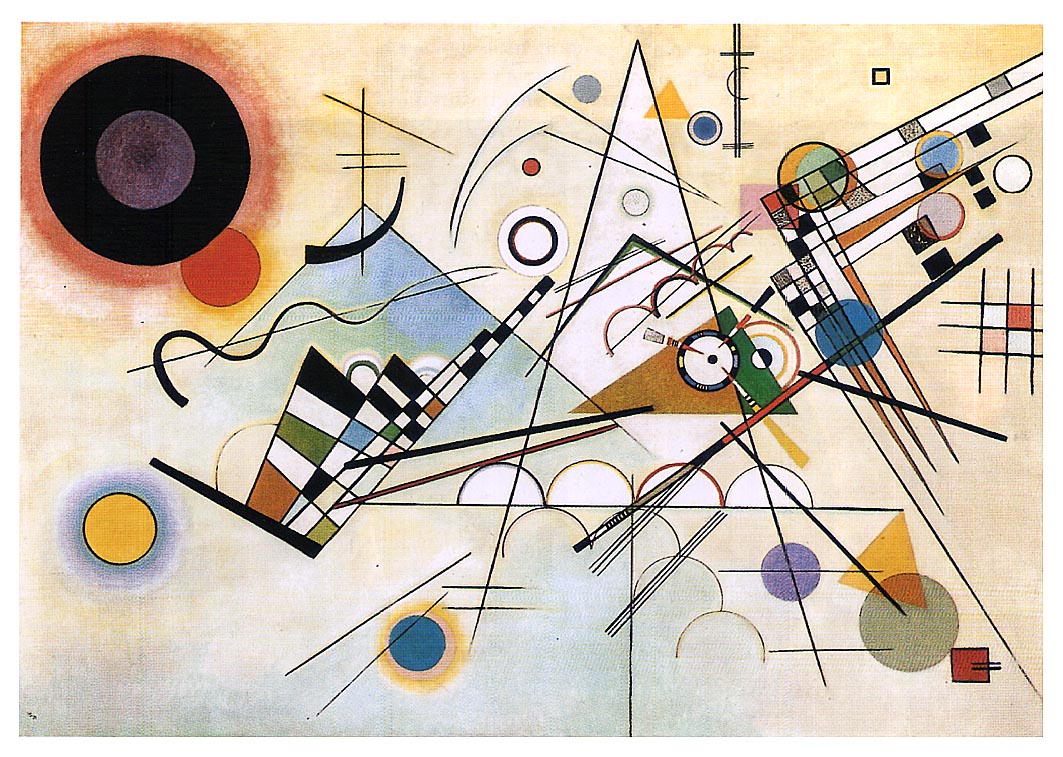
And yet in a short time he changed the whole world. The Bauhaus design defined and developed a modernist style that began in the late 1800s and laid a solid foundation for minimalism and styles combining form to function. Even his educational style, which contributed to experiments and trial and error, left an indelible mark.
One of the main goals of the development of the Bauhaus trend is a synthesis of the arts. And in the future - a synthesis of technology, science and art. Teachers of the school did not broadcast from the department about the truth found once and for all, they searched for this intercultural, interdisciplinary truth with the students. Not surprisingly, the lecture and workshop period in the Bauhaus was a time of incredibly powerful inspiration for Vasily Kandinsky, Paul Klee, Oscar Schlemmer, Gerhard Marx and a time for creating theoretical works.
Although the Bauhaus is most easily associated with architecture, the truth is that it had a monumental impact on all art and commercial design in particular. The Bauhaus movement has changed manufacturers' approach to product design and aesthetics, while at the same time achieving tremendous success in graphic design, such as changing the “acceptable” use for typography.
The Bauhaus design seems almost cyclical - as if it comes back every few decades or so. Given its influence, this is not surprising.
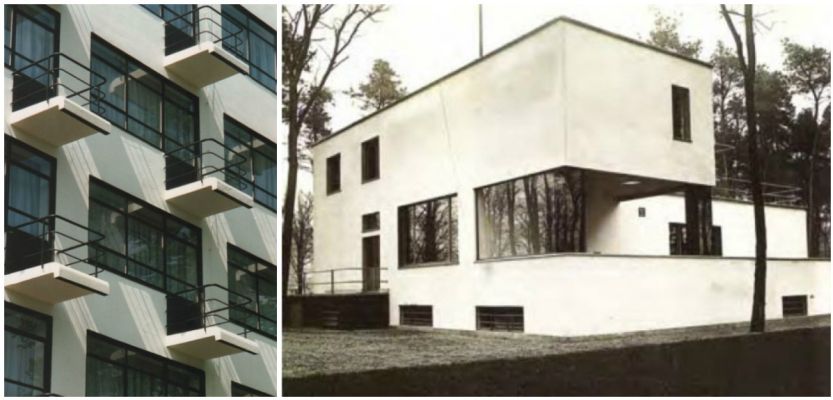
We see the influence of the Bauhaus design every day. We walk under the same buildings designed by the Bauhaus architects, we sit in Bauhaus style armchairs, we turn the Bauhaus style door handles without even recognizing them as a design product. Its influence on the media becomes even more obvious: posters still use the Bauhaus typography and the recent surge of minimalism in web design.
This year, we look back at 100 years of the Bauhaus design, but given all the circumstances, we probably expect another 100 years to come for the Bauhaus design.
Войти через соц. сети: