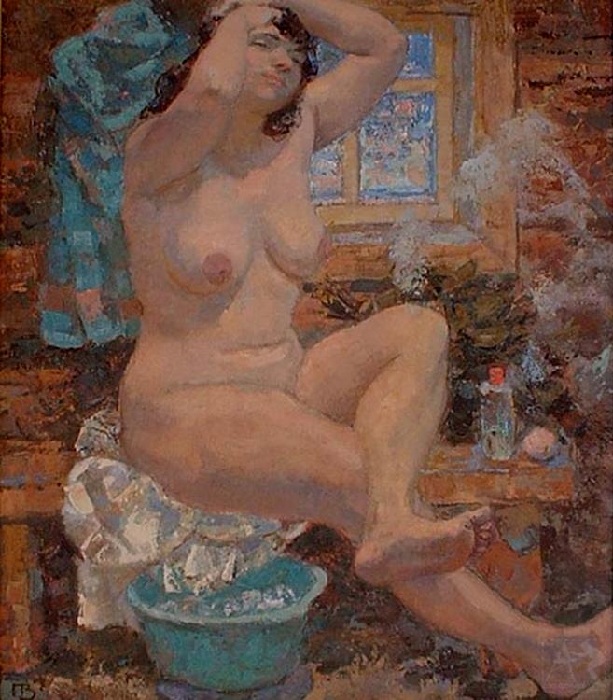
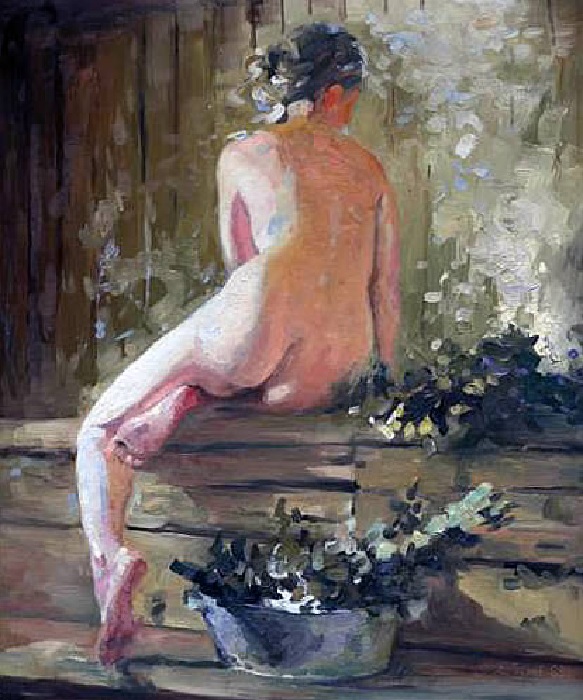
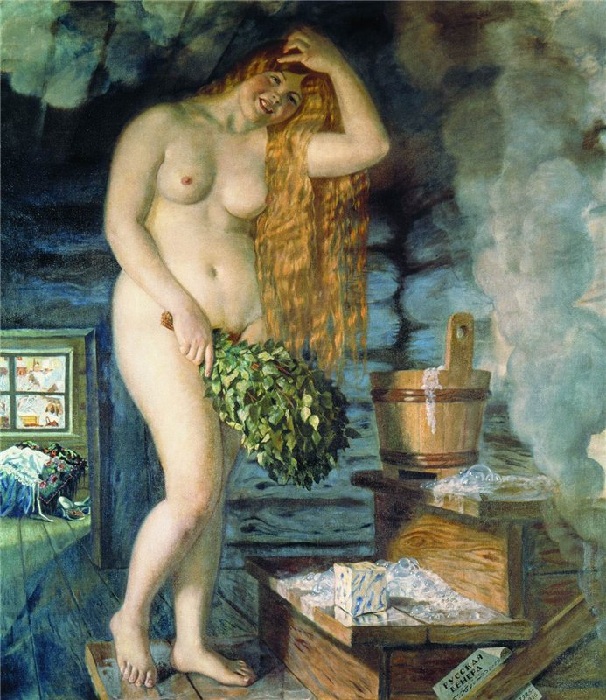
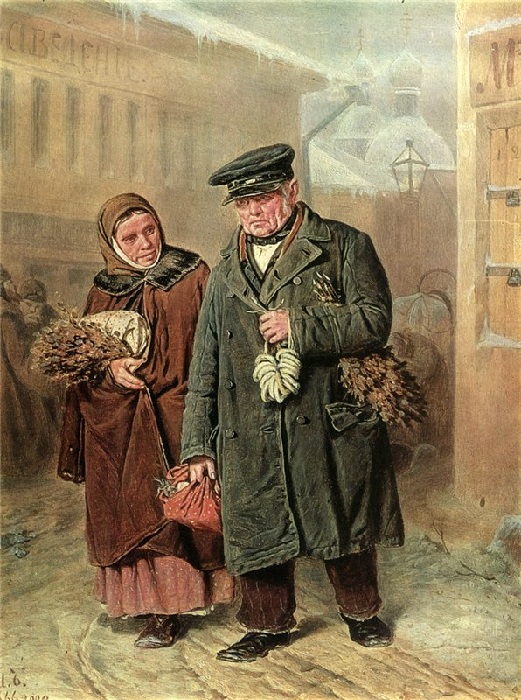
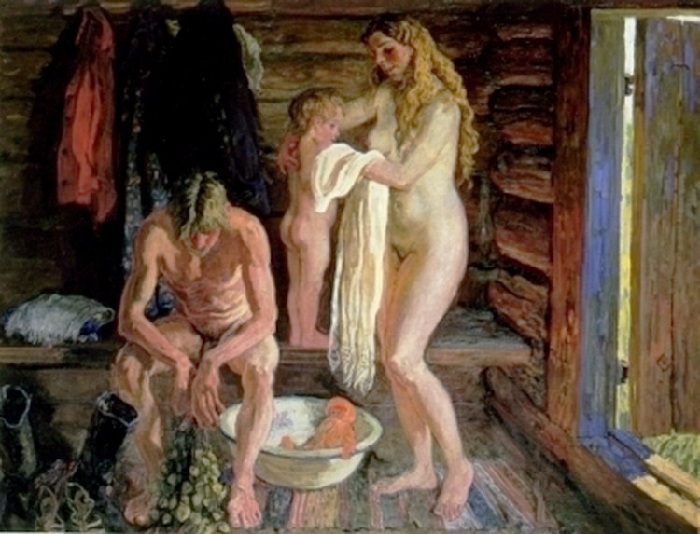
Everyone knows that a bath for a Russian person is a real cult. She soars, she rules. It was held in high esteem among the princes and among the common people. And naturally it was reflected in the works of Russian artists of different eras.
Already in the 5-6 century, the Slavs in Russia had a very popular steam bath, which Nestor the chronicler mentioned in the chronicles.
For the Russian person, the bath was not only a place of washing, but a place uniting four natural elements: fire, air, water and earth. It was believed that if a person visited the bath, he gained the strength of all the elements, being filled with strength and health. Therefore, there was such a saying in Russia: “I washed myself - as if I was born again!”.
In ancient times, our great-grandfathers steamed directly in the house, namely in the Russian stove, which was very practical. Even my mother remembers that when she was a child, she washed in a Russian stove in the house. And my mother is only 68 years old. Therefore, we can say that not so long ago it was.
Ashes were removed from the oven, straw was laid and the washing process itself began, the man climbed into the oven, he was given a broom and a bucket of water, and the valve was closed behind him. A soaring broom splashed onto the wall of the oven, from which came excellent steam. At the end of the soaring, the bather pounded the damper, he was opened and helped to get out of the furnace. After that, the steamed one was poured with plenty of water in the yard or in the shed.
Over time, baths began to appear in Russia, without which it was simply impossible to imagine Russian life. For what kind of Russian since ancient times did not like to give in to the park, but to whip himself with a birch besom. The bath was in the house of every rich and poor person, but as far as the very poor were concerned, there were public baths for them.
Many foreign travelers wrote about Russian baths. So, for example, the German scholar Olearius, who traveled around Muscovy in the 17th century, wrote: “Russians can endure intense heat, from which they become reddened and exhausted to the point that they are no longer able to remain in the bath ... They run out naked on street and poured cold water. In winter, having run out from the bath to the courtyard, they roll in the snow, rub their bodies as if with soap, and then run to the bath again. ”
They were shocked by the fact that in Russian baths the male and female population was steamed together. And only in 1743 a decree was issued forbidding the joint washing of women and men in public baths. However, this decree was observed for many years only in large cities. The law on building separate women's and men's baths was first issued by Catherine II.
Washing in baths was also of a traditionally ritual character. For example, on the eve of the wedding, the bride and groom must have washed in the bath, and after the wedding night, the husband and wife went to the bath together.
One of the main attributes of the bath, of course, is considered a bath besom. Bath brooms are such a serious attribute that they were treated with particular trepidation and excitement. Knit brooms can only be a full moon. And cutting off branches from a birch or an oak, it was necessary to ask for forgiveness from a tree.
It was also forbidden to go to the bathhouse alone after midnight, since it was believed that an evil force came to visit the banniki. Before entering the bath, the pectoral cross was necessarily removed, because it was believed that the essences that lived in the bath did not like the symbols of faith. When entering a bathhouse, it was necessary to ask permission from the “master”, and, when going out, thank the bath spirit for “hospitality”.
It was forbidden in the bath to spit on the stones - a bannik could spit back. Yes, and someone else's broom could not be used, because it was possible to bring upon someone else's ailment il trouble.
Bath in addition to washing has long served as a place for various magical rites. Here guessed, made love spells, removed the evil eye or damage. And in the baths they were both born and died.
Do you like to bathe in the sauna?
Войти через соц. сети: